


What is the working principle of an Air Compressor?
2026-04-11


Has it ever occurred to you how does an air compressor work? You are not alone. Air compressors quietly power countless operations, whether it is tools in a workshop or big industrial systems. However, their work process is almost magical.
The principle of air compressor in operation is, in fact, very beautiful. It transforms mechanical energy to compressed air in a regulated way of intake, compression and storage. We shall take it apart in a human-understandable manner, as well as explore the technical specifics of what makes this machine so mighty.
What is an Air Compressor and how it works?
An air compressor is a machine that absorbs air, decreases its volume and increases its pressure. This is referred to as compressed air generation.
The principle of air compressor working is, at the simplest, to squeeze the air into a smaller area in order to make it stronger.
This is founded on the relationship between pressure and volume which is usually described by the Boyle Law. A decrease in air volume results in an increase in pressure. This is the way air compressors generate usable energy.
The Principle of Air Compressor Working in a Simple Way
To know the operation of the air compressors, consider a balloon. The denser the air is when you squeeze it. It is precisely what occurs within a compressor.
Air compressor mechanism is based on three major steps:
- Air intake through an air intake valve
- The squeeze within a compression chamber.
- Discharge through a discharge valve into a tank
This is known as the air intake compression discharge process and is the foundation of any compressor system.
Air Compressor Process Step by Step
We will step by step dissect how does an air compressor work:
1. Air Intake Phase
The intake valve allows air to pass through. This is the suction stage of the air compression cycle.
2. Compression Stage
The air is squeezed using a piston and cylinder or rotating screws. This increases pressure and temperature.
3. Storage Phase
An air storage tank is used to store compressed air that can be used.
4. Release Phase
A tool or system releases air through a regulator.
This is a process of air storage and release that maintains constant airflow, even when the demand is varying.
Important Elements and their roles
Knowing the parts and the processes of the air compressor will enable you to visualize what occurs within the machine.
Important parts include:
- Compressor pump, compresses the air
- Electric motor, powers the system
Crankshaft mechanism, converts motion.
- Pressure switch, controls automatic operation.
- Regulator and gauge, control pressure output.
- Cooling system in compressors, cools down heat.
All components play a role in the efficient transfer of energy in compressors where electrical or fuel energy is converted into compressed air.
How Does a Piston Air Compressor Work?
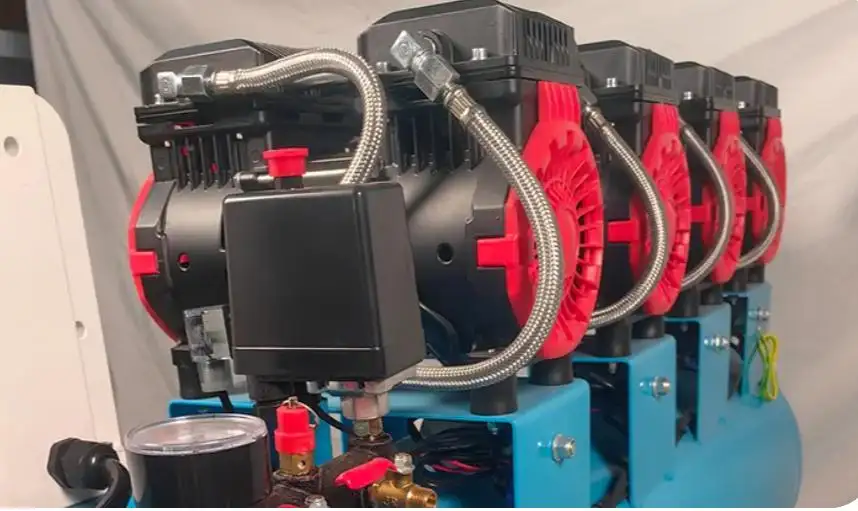
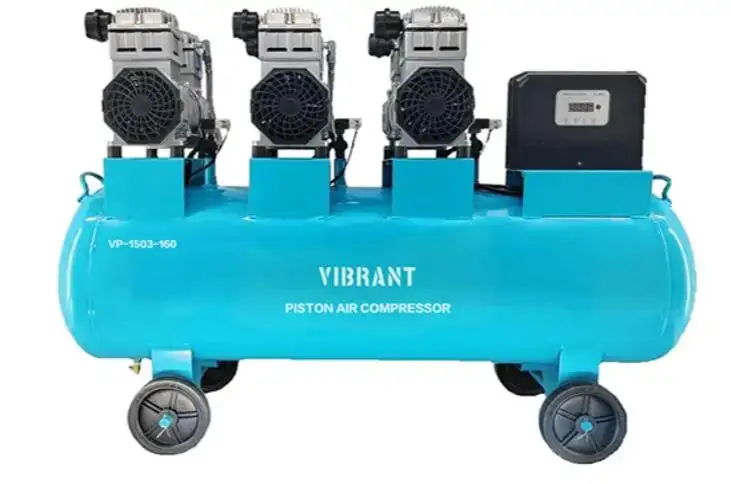
The principle of operation of the reciprocating compressor involves the use of a piston that operates within a cylinder. The following is the operation of a piston system:
The piston descends, pulling air in.
- It moves up, compressing the air
- The tank is forced to receive compressed air.
This is the mechanism of the piston air compressor, which is mostly applied in small workshops and home arrangements.
How Does a Rotary Screw Compressor Work?
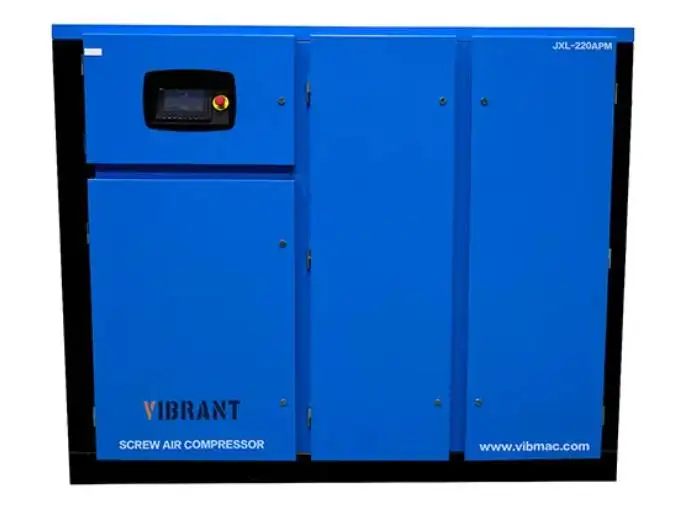
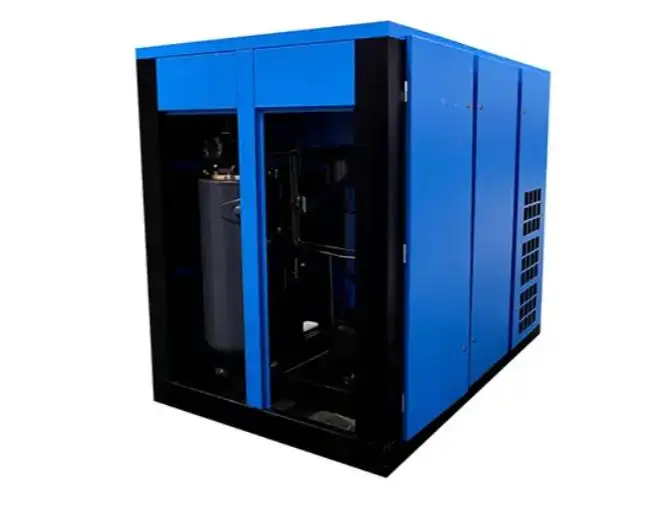
Now we are going to discuss the working principle of rotary screw compressor which is commonly used in industries.
It does not have pistons but has two rotating screws. These screws trap air and squeeze it incessantly.
This method offers:
- Smooth airflow
- High efficiency
- Continuous operation
To get a complete picture of air compressor explained, you must be aware of the types:
- Reciprocating (piston) compressor, small-scale.
- Rotary screw compressor, to be used in industry.
- Centrifugal compressor, when large-scale.
- Scroll compressor, applied in HVAC.
- Portable air compressor, to be mobile.
Air Compression Thermodynamics
Thermodynamics of air compression is used to describe the way temperature and pressure vary during compression.
Two key processes:
- Isothermal compression, temperature is kept constant.
- Adiabatic compression, rise in temperature.
In actual systems, compression is between the two. In addition, cooling systems are necessary to ensure efficiency because of the heat produced during compression.
Technical Terms You Should be aware
These terms are important to really comprehend how a compressor increases air pressure.
- PSI (pounds per square inch ), measures pressure.
- CFM (cubic feet per minute), is a measure of airflow.
- Inlet and outlet pressure ratio, compression ratio.
- Volumetric efficiency, air intake efficiency.
These characterize performance and assist in the selection of the appropriate system.
What is the Process of Air Compressor Pressure?
The solution is the pressure buildup mechanism. Compression of air is repeated, and it builds up in the tank. The functioning of the compressed air storage tank maintains the pressure at a constant level. The system is automatic pressure controlled:
- Stops under pressure to limit.
- Restarts on pressure decreasing.
This cycle provides effective continuous vs intermittent operation.
How Does an Air Compressor Motor Work?
The core of the system is the motor. The motor drives the pump in the operation of electric air compressor. It uses pistons or screws to compress air. In the absence of the motor, there is no mechanical energy to air energy conversion.
What is the Working of a Small Air Compressor at Home?
A home compressor is simple and compact.
It is done in the same way:
- Intake air
- Compress it
- Store it
Common uses include:
- Tire inflation mechanism
- Spray painting systems
- DIY tools
Uses of Air Compressors
Many industries operate with air compressors. Typical air compressor uses are:
- Pneumatic tools operation
- Manufacturing and automation
- HVAC systems and compressors.
- Air-powered machinery
They play a vital role in the contemporary compressed air systems.
Why Do Air Compressors Need a Tank?
The tank plays a critical role. It helps in:
- Storing compressed air
- Maintaining consistent pressure
- Reducing motor load
Maintenance of Air Compressors
To maintain your system efficient: Check oil level in oil-lubricated systems.
- Clean intake filters
- Check valves and seals.
- Monitor pressure levels
The decision to use oil-free or oil-lubricated compressor is based on your application. Proper care improves energy efficiency in air compressors.
What Is Going on with My Air Compressor? Why Is It Not Building Pressure?
Possible reasons:
- Air leaks
- Faulty valves
- Worn piston rings
- Pressure switch issues
How Does an Air Compressor Work?
Within, there is a perpetual cycle:
- Air enters
- Gets compressed
- Heat is generated
- Air is stored
This continuous suction and compression stages cycle guarantees consistent performance.
Conclusion
You have a clear idea now about how does an air compressor work, both at home and in does sophisticated industrial systems. This is a strong engine that transforms normal air into a trustworthy source of energy that propels tools, industries and innovation.
You can find reliable solutions at Vibmac in case you are planning to upgrade or invest in high-performance systems. Their high technology compressor is engineered to be efficient, durable and real world.
Go to the next level of your operations with smarter air solutions at vibrant today.